A) 2
B) 6
C) 8
D) 16
Multiply the first number by 3 → 6 × 3 = 18
Apply same logic: 4 × 3 = 12 → but 12 is not an option
Try squaring: 6² = 36 → not helpful
Try 6 × 3 = 18 → maybe 4 × 2 = 8
✅ Correct Answer: (c) 8
A) 2
B) 6
C) 8
D) 16
Multiply the first number by 3 → 6 × 3 = 18
Apply same logic: 4 × 3 = 12 → but 12 is not an option
Try squaring: 6² = 36 → not helpful
Try 6 × 3 = 18 → maybe 4 × 2 = 8
✅ Correct Answer: (c) 8
(a) 22
(b) 29
(c) 18
(d) 51

(a) 64 : 36
(b) 2 : 1
(c) 22 : 10
(d) 134 : 112
Solution: Clearly, the relationship is 2x:x. This relationship exists in (b). So, the correct answer is (b).
(a) 5
(b) 15
(c) 45
(d) 49
Solution: Clearly, the numbers in the given set are all prime numbers. 5 is also a prime number and so belongs to the same group. Hence, the answer is (a).
(a) (44, 22, 10)
(b) (46, 22, 11)
(c) (40, 20, 10)
(d) (42, 20, 10)
Solution: Clearly, in the given set, the first number is twice the second and the second number is twice the third.
Hence, the answer is (c).
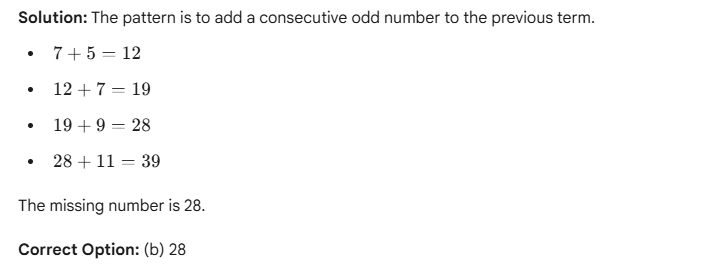
(a) 29
(b) 28
(c) 26
(d) 24
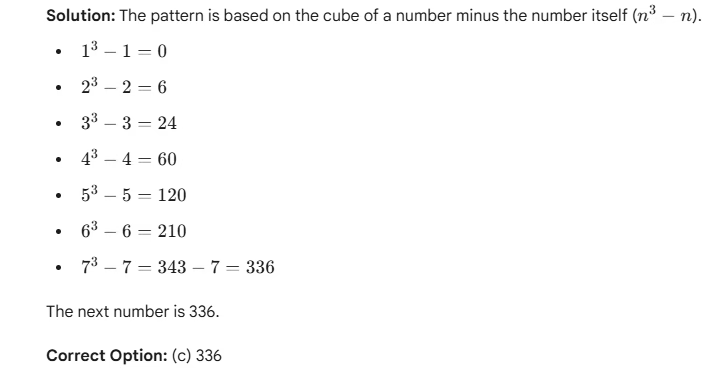
(a) 240
(b) 290
(c) 336
(d) 504
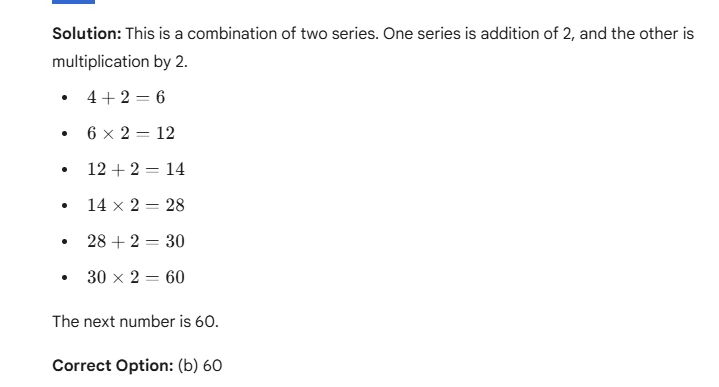
(a) 32
(b) 60
(c) 62
(d) 64
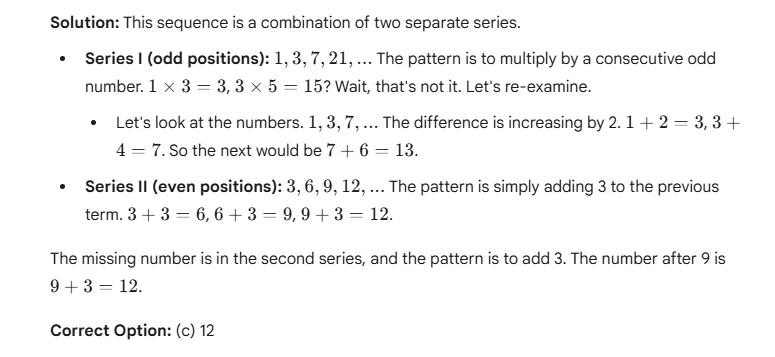
(a) 10
(b) 11
(c) 12
(d) 13
(a) 35
(b) 36
(c) 48
(d) 49
