CSS MPT 2025: Your Essential Guide to the Results and Next Steps

The journey to becoming a Civil Servant in Pakistan is a challenging yet rewarding one, beginning with the crucial MCQ-Based Preliminary Test (MPT). For aspirants of the CSS 2025 examination, the announcement of the MPT results marks a pivotal moment. If you’ve been eagerly awaiting updates, or are planning your CSS journey, this post will break down everything you need to know about the CSS MPT 2025 results.

The Big Day: When Were the CSS MPT 2025 Results Announced?

The Federal Public Service Commission (FPSC) officially announced the results for the CSS 2025 MPT on December 20, 2024. This declaration set the stage for thousands of candidates to move forward to the next, more intensive phase: the CSS Written Examination.

What If Your Result Was Withheld or Rectified?

It’s common for some results to be initially withheld due for various reasons, or to undergo rectification. For CSS MPT 2025, the FPSC also released subsequent lists of restored and rectified candidates who successfully qualified in early January 2025. If you were in this category, checking the updated lists on the FPSC website was crucial.

Checking Your Result: Where to Look

The official source for your MPT result is always the Federal Public Service Commission (FPSC) website. You should navigate to their dedicated “MPT Result” or “Web Notices” section. Here, you’ll typically find:

  • Roll Number-wise Results: Allowing you to check your individual score.
  • Lists of Qualified Candidates: Categorized by regions or other criteria.
  • Lists of Non-Qualified Candidates.
  • Specific Lists for Withheld/Rectified Results.

Understanding the MPT: More Than Just a Test

The MPT isn’t just another exam; it’s a critical screening tool designed to filter candidates before they sit for the comprehensive written examination. Here’s what makes it unique:

  • Mandatory Screening: You must pass the MPT to be eligible for the main CSS Written Exam.
  • Qualifying Marks: The passing threshold is 33% marks, meaning you need to score at least 66 out of 200.
  • MCQ Format: The test comprises 200 Multiple Choice Questions, with each carrying one mark, to be completed within 200 minutes.
  • No Impact on Final Merit: Your MPT score determines your eligibility, but it does not contribute to your final merit score for the CSS selection. It’s a hurdle, not a race.
  • Validity: The MPT result is only valid for the CSS exam of the year it was taken (i.e., CSS 2025 MPT for CSS 2025 main exam).

What Comes Next? The Main Written Examination!

For those who qualified, the MPT result signals the real work begins. Here are the critical dates and details for the next phase:

  • Online Application for Written Exam: The application window for the main CSS Written Examination 2025 opened shortly after the MPT results, from December 23, 2024, to January 06, 2025. Missing this deadline means missing your chance!
  • Written Exam Dates: The main CSS Competitive Examination 2025 commenced from February 15, 2025, to February 23, 2025.

Looking Ahead: Your CSS Journey

If you’ve qualified, congratulations! Now is the time to intensify your preparation for the written papers. If you didn’t make it this time, remember that the CSS journey often involves multiple attempts. Analyze your performance, learn from the experience, and prepare to tackle the MPT again for the next cycle.

The CSS MPT is just the first step. Success requires perseverance, strategic preparation, and a deep understanding of the exam’s demands. We wish all aspirants the very best in their endeavors!
CSS Exam Syllabus & Subjects – Compulsory & Optional – Subject Selection – Total Marks

The Central Superior Services (CSS) Syllabus is the official framework issued by the Federal Public Service Commission (FPSC) for candidates preparing for the competitive examination. The written exam totals 1200 marks, split equally between compulsory and optional subjects.

Understanding this syllabus is the first crucial step, as it dictates the minimum passing criteria for each subject and the rules for selecting your optional papers.


1. Compulsory Subjects (600 Marks) 📝

These six subjects are mandatory for all candidates. You must score a minimum of 40% in each of these papers to pass the written exam (with the exception of General Knowledge papers, which have a collective passing requirement).

SubjectMarksCritical Focus Areas
English Essay100Analytical, argumentative, and discursive writing; comprehensive & research-based knowledge on social/national issues.
English (Precis & Composition)100Precis writing, reading comprehension, grammar, vocabulary, sentence correction, and Urdu-to-English translation.
General Science & Ability100Basic science concepts, environmental science, mental ability (arithmetic, logic, and basic statistics).
Current Affairs100National, regional, and international events; political, economic, and security developments (generally covering the last 1–2 years).
Pakistan Affairs100History, geography, political system, socio-economic issues, and current policy challenges of Pakistan.
Islamic Studies / Comparative Study100Basic principles, historical events, ethical teachings, and governance in Islam (for Muslims) OR Comparative Study of Major Religions (for non-Muslims).

2. Optional Subjects (600 Marks) 📚

Candidates must select subjects totaling 600 marks from the list of optional subjects, which are divided into seven groups. The key rules are:

  1. A minimum of 33% is required in each optional subject paper.
  2. The subjects must be chosen according to the group selection rules to total exactly 600 marks.
  3. You cannot opt for more than one subject from any single group (except for Group II, which has specific rules).

Here is a simplified breakdown of the optional subject groups:

GroupSubjects (Examples)Marks OptionsRule for Selection
Group IPolitical Science, International Relations, Economics, Computer Science200Select one subject of 200 marks only.
Group IIPhysics, Chemistry, Applied/Pure Mathematics, Statistics, Geology200/100Select one subject of 200 marks OR two subjects of 100 marks each.
Group IIIPublic Administration, Business Administration, Governance & Public Policies100Select one subject of 100 marks only.
Group IVHistory of Pakistan & India, History of USA, British History, Islamic History & Culture100Select one subject of 100 marks only.
Group VGender Studies, Environmental Sciences, English/Urdu Literature, Zoology/Botany100Select one subject of 100 marks only.
Group VILaw, Constitutional Law, International Law, Criminology, Philosophy100Select one subject of 100 marks only.
Group VIIJournalism & Mass Communication, Psychology, Sociology, Geography, Regional Languages (e.g., Punjabi, Pashto)100Select one subject of 100 marks only.

💡 Subject Selection Strategy

Choosing your optional subjects is often a major factor in success. It’s advisable to select subjects that:

  • You have a strong academic background in (e.g., your university major).
  • Have a significant overlap with the compulsory papers (e.g., International Relations, Constitutional Law).
  • Have a reputation for being high-scoring or are generally easier to manage given the length of the syllabus.

You must refer to the latest official FPSC Syllabus PDF for the detailed course outline of each subject before finalizing your choices.

A Comprehensive Review of the CSS Examination in Pakistan: Gateway to the Civil Service

The Ultimate Challenge: What is the CSS Exam?

Every year, tens of thousands of ambitious graduates in Pakistan pin their hopes on a single, formidable challenge: the Central Superior Services (CSS) Examination. This isn’t just another test; it is the most prestigious and competitive examination in the country, serving as the sole gateway to the elite Civil Services of Pakistan.

Conducted annually by the Federal Public Service Commission (FPSC), the CSS exam selects future officers for highly influential bureaucratic posts (starting at BPS-17 grade) across the federal government. Successfully clearing it means securing a place in one of the 12 specialized Occupational Groups, which include:

  • The Pakistan Administrative Service (PAS): The pinnacle of administrative roles.
  • The Police Service of Pakistan (PSP): For senior policing positions.
  • The Foreign Service of Pakistan (FSP): For diplomatic and international assignments.
  • The Customs, Audit & Accounts, Inland Revenue, and Information Groups.

Are You Eligible? Essential Requirements to Apply

Before you can even begin preparing, you must meet the FPSC’s strict criteria. The requirements are absolute, and a single missed detail can disqualify you.

CriterionKey Details You Must Know
Age Limit21 to 30 years. (As of the cut-off date, usually Dec 31st of the preceding year).
Age RelaxationTwo years of relaxation (up to 32) is available for specific categories, including candidates from officially designated regions and in-service government servants.
Educational QualificationA minimum of a Bachelor’s Degree (14 years of education) with at least a Second Division (‘C’ grade) from an HEC-recognized university.
Total AttemptsCandidates are permitted a maximum of three attempts throughout their lifetime.

The Multi-Stage Gauntlet: Structure of the Examination

The CSS exam is a rigorous, 1,500-mark marathon broken down into three main phases.

Phase 1: The Written Examination (1200 Marks)

The written test is the core of the exam. Candidates must pass a total of 12 papers (6 compulsory and 6 optional) and achieve an overall aggregate of 50% (600/1200) to qualify for the next stage.

A. The Compulsory Papers (600 Marks)

These six papers are mandatory for every candidate. The focus here is on language skills and general awareness. A minimum of 40% marks is required in each compulsory subject.

  • English Essay (100 Marks)
  • English (Precis & Composition) (100 Marks)
  • General Science & Ability (100 Marks)
  • Current Affairs (100 Marks)
  • Pakistan Affairs (100 Marks)
  • Islamic Studies OR Comparative Religion (100 Marks)
B. The Optional Papers (600 Marks)

Candidates must strategically choose subjects totaling 600 marks from the seven official groups provided in the FPSC syllabus. This is often where candidates gain a critical edge. A minimum of 33% marks is required in each optional paper.

Phase 2: The Final Stages (300 Marks)

Once a candidate clears the written exam aggregate, they move on to the final evaluation stages, which assess personality, aptitude, and physical fitness.

  1. Medical Examination: A mandatory check for physical fitness and suitability.
  2. Psychological Assessment: Written tests and group discussions to gauge personality traits, mental fitness, and suitability for high-stress administrative roles.
  3. Viva Voce (The Interview – 300 Marks): The final hurdle. A panel assesses the candidate’s critical thinking, communication, general knowledge, and overall personality. The pass mark for the interview is 100 marks (33%).

The Brutal Reality: Why the Success Rate is Low

The CSS exam is synonymous with a low success rate, often hovering in the low single digits. Why is it so challenging?

  • English Language: Weak performance, particularly in the Essay and Precis papers, is the number one reason for failure. Excellent, clear, analytical English is non-negotiable.
  • Analytical Depth: The examiners demand more than rote learning; they require deep analytical insight, structuring arguments logically, and providing relevant, well-sourced evidence.
  • Strategic Subject Selection: Choosing optional subjects that align with one’s background and scoring potential is crucial for meeting the 600-mark aggregate.

The Reward: Serving Pakistan

The path to becoming a CSS officer is long, challenging, and requires incredible discipline. However, those who succeed are granted the extraordinary opportunity to serve Pakistan at the highest administrative levels, directly influencing policy and governance. The CSS exam is not just about passing; it’s about proving one’s mettle to lead the nation.

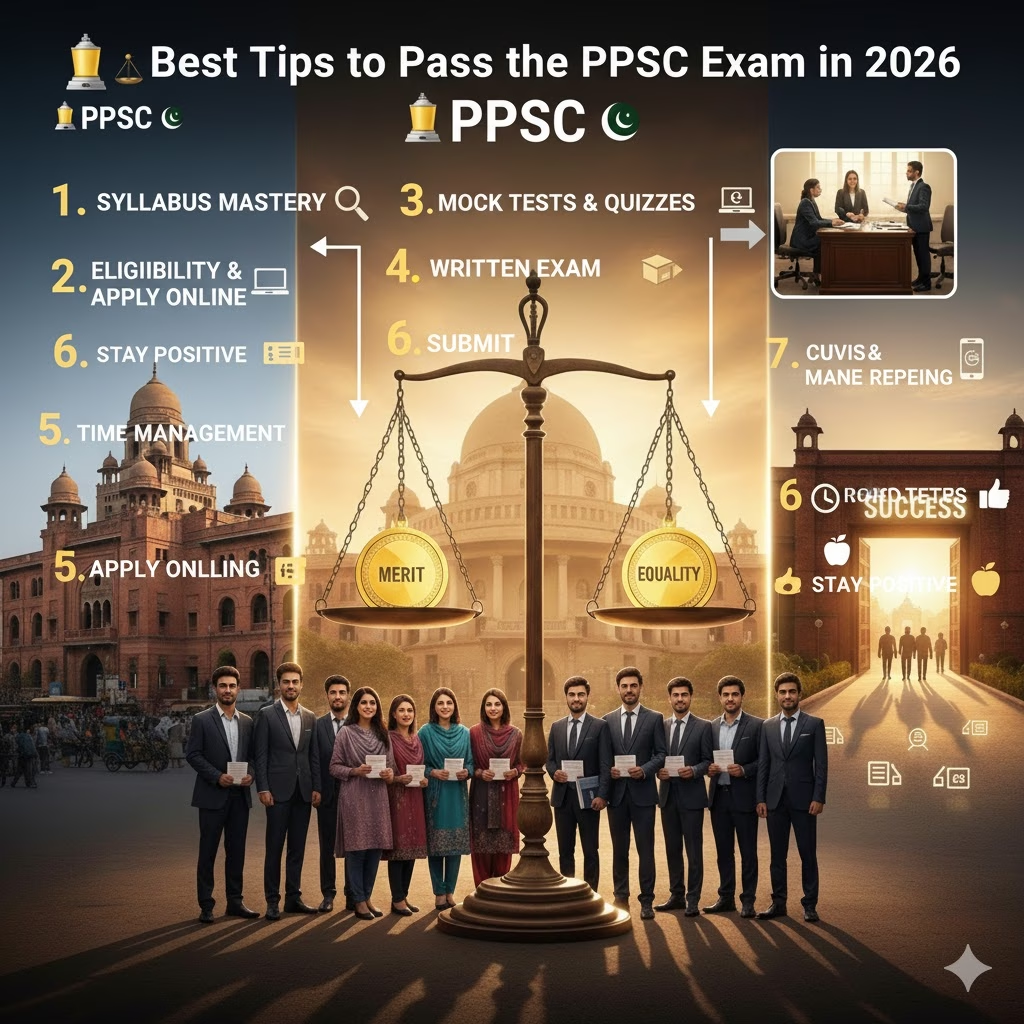
Best Tips to Pass the PPSC Exam in 2026

💼 A Simple Guide for Students

The Punjab Public Service Commission (PPSC) exam is one of the most respected ways to get a government job in Punjab. Every year, thousands of students apply — but only a few make it.
If you’re planning to appear in the PPSC exams in 2026, here are the best and easiest tips to help you succeed.


1. Know the Syllabus First

Before you start studying, always read the official syllabus from the PPSC website (www.ppsc.gop.pk).
This helps you focus on what’s important instead of wasting time on unnecessary topics.


2. Understand the Paper Pattern

Most PPSC tests are MCQ-based (100 marks, 90 minutes).
The paper includes:

  • Subject-related questions
  • General Knowledge
  • English
  • Pakistan Studies
  • Current Affairs
  • Islamiat or Ethics (for non-Muslims)
  • Everyday Science

Knowing the pattern gives you a clear direction for your preparation.


3. Make a Daily Study Plan

Discipline is the key.
🕐 Set 4–5 hours daily for study.
📘 Divide your time between subject preparation and general studies.
📗 Revise what you study at night — short, daily revision keeps memory strong.


4. Study from Quality Sources

Don’t depend only on social media notes. Use:

  • PPSC past papers
  • Punjab Textbook Board books
  • Dogar / Caravan / ILMI / JWT books
  • Reliable current affairs magazines

Stay updated with news, editorials, and Punjab government affairs.


5. Practice Past Papers

Solving past PPSC papers is the most effective way to prepare.
It helps you understand:

  • Question style
  • Repeated topics
  • Time management

Try to solve one past paper daily within 90 minutes.


6. Strengthen English & General Knowledge

A large portion of the test involves English grammar, vocabulary, and comprehension, along with general knowledge.
Improve your English by reading newspapers like Dawn or The News daily.
For GK — memorize facts about Pakistan, geography, science, and international organizations.


7. Stay Confident for the Interview

If you pass the written test, focus on your interview preparation:

  • Practice speaking confidently.
  • Know about your field and Punjab’s current issues.
  • Dress professionally and be honest in your answers.

Your attitude and confidence make a strong impression on the panel.


8. Avoid Common Mistakes

🚫 Don’t start studying late.
🚫 Don’t skip the syllabus.
🚫 Don’t rely on guesswork — focus on understanding.
🚫 Don’t panic during the test — manage your time smartly.


9. Believe in Merit, Not Reference

PPSC is completely merit-based.
No recommendation or wealth can help — only your marks and performance matter.
Even students from small towns succeed every year because hard work always wins.


🌟 10. Stay Consistent and Positive

Remember, success doesn’t come overnight.
Keep studying, keep revising, and stay confident.
Your patience and regular effort will lead you to success in the PPSC 2026 exams.


🏁 Final Words

“PPSC exams don’t test your background — they test your preparation.”

So, believe in yourself, study smartly, and stay consistent.
Start early, stay focused, and you’ll proudly say one day —
“Yes, I made it through PPSC — on merit!”

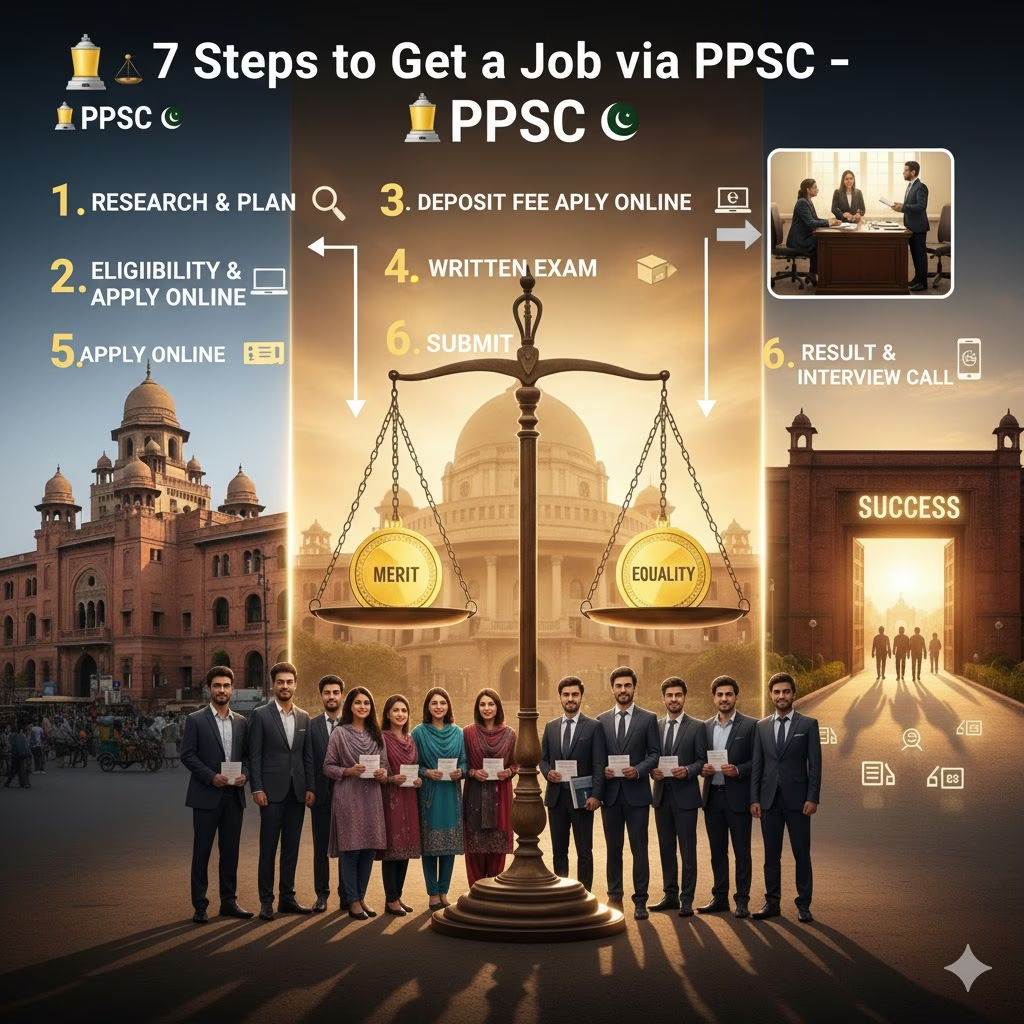
🏛️ 7 Steps to Get a Job via PPSC

💼 The Easy Formula to Get Hired on Merit

Getting a Punjab Government job through the Punjab Public Service Commission (PPSC) is completely possible — if you follow the right strategy. No reference, no shortcut — just hard work, preparation, and patience.
Here’s your 7-step formula to success 👇


Step 1: Visit the Official Website

Go to www.ppsc.gop.pk
Check the latest advertisements and read the job details carefully — department name, qualification, age limit, and syllabus.


Step 2: Choose the Right Post

Apply only for posts that match your education and interest.
Choosing the right field increases your confidence and chances of success.


Step 3: Apply Online

  • Click on “Apply Online” on the PPSC website.
  • Fill in your details carefully.
  • Upload your photo and CNIC.
  • Pay the fee online via ATM, Internet Banking, JazzCash, or EasyPaisa.

Keep your application number safe!


Step 4: Prepare Smartly

The written test (100 marks, 100 minutes) usually includes:
📘 Subject Knowledge
📗 English, General Knowledge, Pakistan Affairs, Islamiyat
📙 Current Affairs & Everyday Science

Make a study plan and solve past papers daily.


Step 5: Attempt the Test Confidently

Be calm and focused during the test. Time management matters!
Remember — accuracy + speed = success.


Step 6: Prepare for the Interview

If you pass the written test, get ready for the final round.

  • Revise your subject and general knowledge
  • Dress neatly and confidently
  • Speak clearly and honestly

Your confidence and personality count as much as your knowledge.


Step 7: Wait for the Merit List

After the interview, PPSC uploads the final merit list on its website.
Selections are purely on merit — your marks decide your future, not your background.


🌟 Final Words

Getting a PPSC job is not luck — it’s preparation, patience, and performance.
Whether you’re rich or poor, from a city or a village — PPSC gives equal opportunity to all.

💬 “In PPSC exams, your hard work is your only reference.”

So, start today — visit www.ppsc.gop.pk and begin your journey toward a stable and honorable government career.

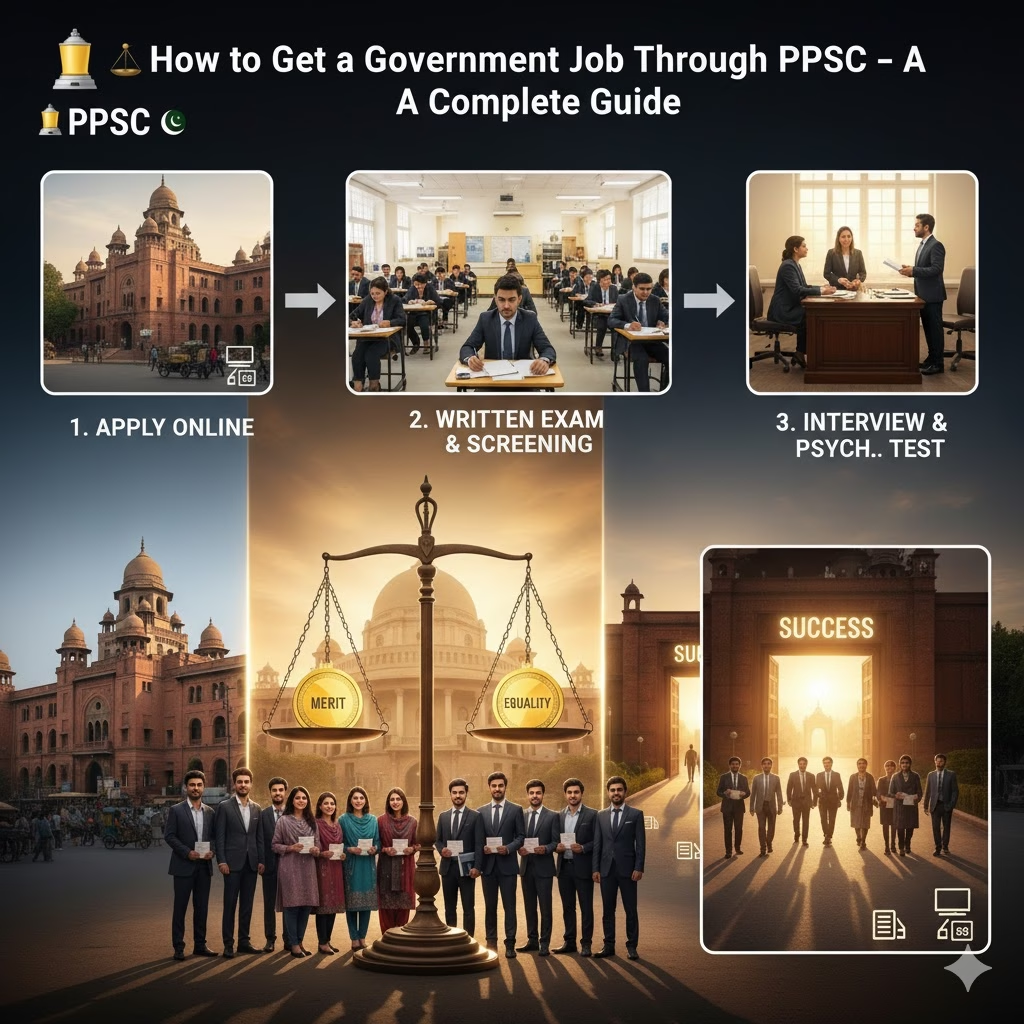
🏛️ How to Get a Government Job Through PPSC – A Complete Guide ( 7 Steps to Get a Job via PPSC )

For thousands of young people in Punjab, securing a government job is a dream — a symbol of stability, respect, and service to the nation. The Punjab Public Service Commission (PPSC) is the official gateway to that dream. It provides a transparent, merit-based process that allows every eligible person — regardless of wealth, status, or background — to earn a government position through hard work and talent.

If you’re aiming to join the Punjab Government through PPSC, here’s everything you need to know.


🔹 Step 1: Understand What PPSC Is

The Punjab Public Service Commission (PPSC) is an autonomous body responsible for recruiting civil servants and officers in provincial departments. It conducts tests and interviews for jobs in sectors like:

  • Education
  • Health
  • Police & Administration
  • Agriculture & Irrigation
  • Local Government
  • Environment & Engineering

Every year, PPSC announces hundreds of vacancies through official advertisements on its website and in newspapers.


🔹 Step 2: Check PPSC Job Announcements

Visit the official website: www.ppsc.gop.pk

Here, you’ll find:

  • Current Advertisements
  • Upcoming Posts
  • Test Schedules
  • Results & Merit Lists

Each advertisement clearly mentions:

  • Department name
  • Post title and grade (BPS)
  • Qualification and experience
  • Age limit and domicile requirements
  • Written test syllabus

👉 Always read the entire advertisement carefully before applying.


🔹 Step 3: Apply Online

Once you find a post that matches your qualification:

  1. Click on “Apply Online” on the PPSC website.
  2. Fill in all required details — personal, academic, and experience information.
  3. Upload a passport-size photo and CNIC.
  4. Pay the application fee through:
    • ATM / Internet Banking
    • Mobile Wallets (JazzCash, EasyPaisa, U-Paisa)
    • 1Link Member Bank Branches

After submitting, you’ll receive an application number — keep it safe.


🔹 Step 4: Prepare for the Written Test

PPSC conducts MCQ-based written tests (usually 100 marks, 90 minutes). The test may include:

  • Subject-related questions
  • General Knowledge
  • English, Urdu, Pakistan Studies, Current Affairs, and Everyday Science

📘 Tips for Preparation:

  • Read your subject textbooks and past papers.
  • Stay updated with national and international news.
  • Practice multiple-choice questions daily.
  • Improve your English comprehension and writing skills.

If you’re applying for competitive posts like PMS or Assistant Director, dedicate 3–6 months to focused preparation.


🔹 Step 5: Clear the Interview

After passing the written test, shortlisted candidates are called for an interview.
The interview panel includes senior government officials and subject experts who assess your:

  • Confidence and communication
  • Knowledge about your field and current affairs
  • Motivation to serve in public service

✅ Dress professionally
✅ Be honest and well-prepared
✅ Review your written test syllabus and basic general knowledge


🔹 Step 6: Wait for the Final Merit List

After the written and interview stages, PPSC publishes a final merit list on its website.
Selections are purely based on:

  • Written test marks
  • Interview performance
  • Academic record

No external influence, political pressure, or reference can affect the outcome — only your merit matters.


💡 Step 7: Appointment & Training

Once selected, you’ll receive an official appointment letter from the concerned department.
Some posts include departmental training before joining service. From there, your journey as a Punjab Government Officer begins.


🧭 Why Choose PPSC Jobs?

  • ✅ Transparent & fair recruitment system
  • ✅ Permanent and secure government service
  • ✅ Opportunities for promotion and growth
  • ✅ Public respect and professional stability
  • ✅ Equal access for all citizens of Punjab

🏁 Final Words

Getting a job through PPSC isn’t about having money or connections — it’s about preparation, patience, and perseverance. Every year, thousands of ordinary students from villages, towns, and cities achieve success simply because they believed in merit and worked hard.

“In PPSC, your marks speak louder than your background.”

So start preparing today, visit www.ppsc.gop.pk, and take your first step toward a stable, honorable, and rewarding career in the Punjab Government.

⚖️ Are PPSC Jobs Truly on Merit? – Equal Opportunity for All

In Pakistan, many young people dream of serving the nation through government jobs. But one common question always arises — “Are PPSC jobs really on merit?” Can a poor student from a small town compete fairly with someone from a big city or a wealthy background?

The answer is a confident YES.
The Punjab Public Service Commission (PPSC) is one of the few institutions in Pakistan that has maintained a strong reputation for merit, transparency, and fairness in recruitment.

🏛️ What is PPSC?

The Punjab Public Service Commission (PPSC) is an official government body that recruits officers and employees for provincial departments of Punjab. Established under the Punjab Public Service Commission Ordinance, 1978, it ensures that every appointment is made based on qualification, ability, and performance — not wealth, connections, or background.

Every year, thousands of posts are announced in departments such as Education, Health, Police, Local Government, and Agriculture, and all candidates are evaluated under the same competitive system.

💡 How PPSC Ensures Merit

PPSC follows a standardized and transparent process designed to eliminate favoritism:

Open Advertisement:
All vacancies are publicly announced on the official website (www.ppsc.gop.pk
) and in leading newspapers, accessible to everyone across Punjab.

Equal Eligibility Criteria:
Every applicant, whether rich or poor, urban or rural, faces the same qualification and age requirements.

Written Tests:
The written exam is conducted under strict supervision. No reference, no political influence, and no shortcuts work here — only your knowledge does.

Automated Result System:
Results are generated and published online through an automated and centralized system, leaving no space for manipulation.

Interview & Final Merit List:
Candidates who pass the written test are interviewed by panels of independent experts and senior officers. The final merit list is published publicly.

This entire process is digitally managed, monitored, and documented — ensuring that performance speaks louder than power.

💪 A Platform for Everyone

Whether you belong to a village in South Punjab or a city like Lahore or Faisalabad, you have equal access to apply for any PPSC post.
Many successful PPSC candidates come from humble backgrounds — children of farmers, laborers, teachers, and small business owners — who proved that hard work can defeat privilege.

PPSC does not ask how much money you have; it only asks how much effort you’ve made.

🧭 Why Merit Matters

Merit-based recruitment is the foundation of good governance. When capable, educated, and hardworking people are selected for public jobs:

Departments perform better.

Corruption decreases.

People trust the system.

Society becomes more just and progressive.

That’s why PPSC’s role is not just about giving jobs — it’s about building a fair and functional government.

🌍 A Message to All Aspirants

If you’re a student preparing for PPSC exams, remember:

“PPSC doesn’t care who you are — it only cares what you know.”

Your background, financial condition, or location cannot stop you from achieving success. The test is the same for everyone; your dedication makes the difference.

🏁 Final Words

The Punjab Public Service Commission stands as a symbol of merit, equality, and opportunity in Punjab’s government system.
Whether you are rich or poor, urban or rural, male or female — if you have the talent, knowledge, and perseverance, PPSC gives you a fair chance to shine.

In PPSC exams, there is only one currency that matters: your merit.

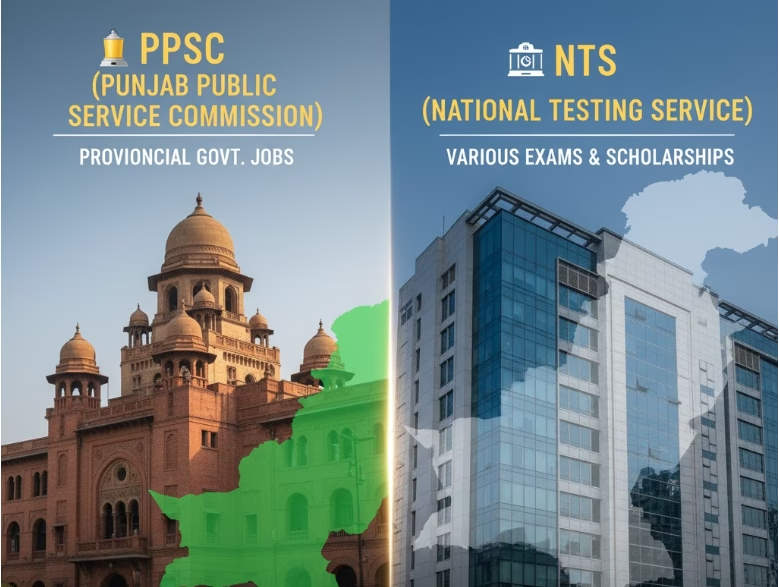
🏛️ PPSC vs NTS – What’s the Difference and Which One Should You Apply For?

In Pakistan, government and semi-government jobs are often advertised through different testing and recruitment bodies. Among the most well-known are the Punjab Public Service Commission (PPSC) and the National Testing Service (NTS). Both conduct exams for various posts, but their roles, authority, and selection systems are quite different.

Let’s explore how they differ — and which one suits your career goals better.


🔹 What is PPSC?

The Punjab Public Service Commission (PPSC) is an official government recruitment authority established under the Punjab Public Service Commission Ordinance, 1978. It works directly under the Government of Punjab to recruit officers for provincial departments.

Main Responsibilities:

  • Conducts competitive exams and written tests for Punjab government posts (usually BPS-11 and above).
  • Recruits officers for departments like Education, Health, Police, Agriculture, Local Government, and Administration.
  • Conducts the prestigious Provincial Management Service (PMS) exam.
  • Ensures merit-based selection through written tests, interviews, and psychological assessments.

Nature: Government (Constitutional Body)
Website: www.ppsc.gop.pk
Head Office: LDA Plaza, 7-Edgerton Road, Lahore


🔹 What is NTS?

The National Testing Service (NTS) is a private, semi-autonomous testing organization established in 2002 by the COMSATS Institute of Information Technology (CIIT). It is registered under the Companies Act 2017 as a non-profit organization.

Main Responsibilities:

  • Conducts tests and assessments for universities, government departments, and private institutions.
  • Provides testing services for recruitment, scholarships, and admissions.
  • Offers well-known exams such as NAT (National Aptitude Test) and GAT (Graduate Assessment Test).
  • Acts as a third-party testing agency — not a recruiting body itself.

Nature: Private / Independent Testing Organization
Website: www.nts.org.pk
Head Office: Islamabad


⚙️ Key Differences Between PPSC and NTS

FeaturePPSCNTS
Type of OrganizationGovernment (Provincial Commission)Private (Testing Organization)
Established ByGovernment of PunjabCOMSATS / HEC (Independent body)
Legal AuthorityPunjab Public Service Commission Ordinance, 1978Registered under Companies Act 2017
Recruitment LevelPunjab Government Departments (BPS-11 and above)Various Federal, Provincial, and Private Sector Organizations
Exam TypeCompetitive Exams (e.g., PMS, technical & administrative posts)Screening/Recruitment Tests (for shortlisting)
Selection PowerPPSC itself selects and appoints candidatesNTS only conducts tests; final selection done by the hiring department
Result TransparencyOfficial government process with published merit listsDepends on the hiring organization’s criteria
Application ModeOnline via ppsc.gop.pkOnline via nts.org.pk
Test ExamplesPMS, Lecturer, Sub Engineer, Assistant Director, etc.Teachers (Education Dept.), University Admissions, Scholarships, etc.

🧭 Key Similarities Between PPSC and NTS

  • Both conduct written tests to assess knowledge, aptitude, and subject expertise.
  • Both follow transparent procedures and use online systems for applications and results.
  • Both require fee submission through banks or mobile payment systems.

💡 Which One is Better for You?

It depends on your career goals and qualification level:

  • Choose PPSC if you want a permanent government job in the Punjab Provincial Government (e.g., PMS, Lecturer, Assistant Director, Sub Engineer).
  • Choose NTS if you are applying for jobs in autonomous bodies, universities, or contract-based positions, or appearing for scholarship/admission tests.

⚖️ Summary

AspectPPSCNTS
AuthorityOfficial Provincial Government BodyPrivate Testing Agency
FocusGovernment Job RecruitmentTesting & Assessment Services
ExamplesPMS, Lecturer, Agriculture OfficerNTS Teachers Test, GAT, NAT
Province/ScopePunjab OnlyNationwide (All Pakistan)

🏁 Final Thoughts

While PPSC is a constitutional government institution directly responsible for hiring in Punjab’s provincial departments, NTS serves as an independent testing service provider for both public and private sector organizations.

In short, PPSC recruits — NTS tests.
Both play important roles in promoting transparency, merit, and professionalism in Pakistan’s public and private job markets.

⚖️ PPSC vs FPSC – Understanding the Difference Between Pakistan’s Top Recruitment Commissions

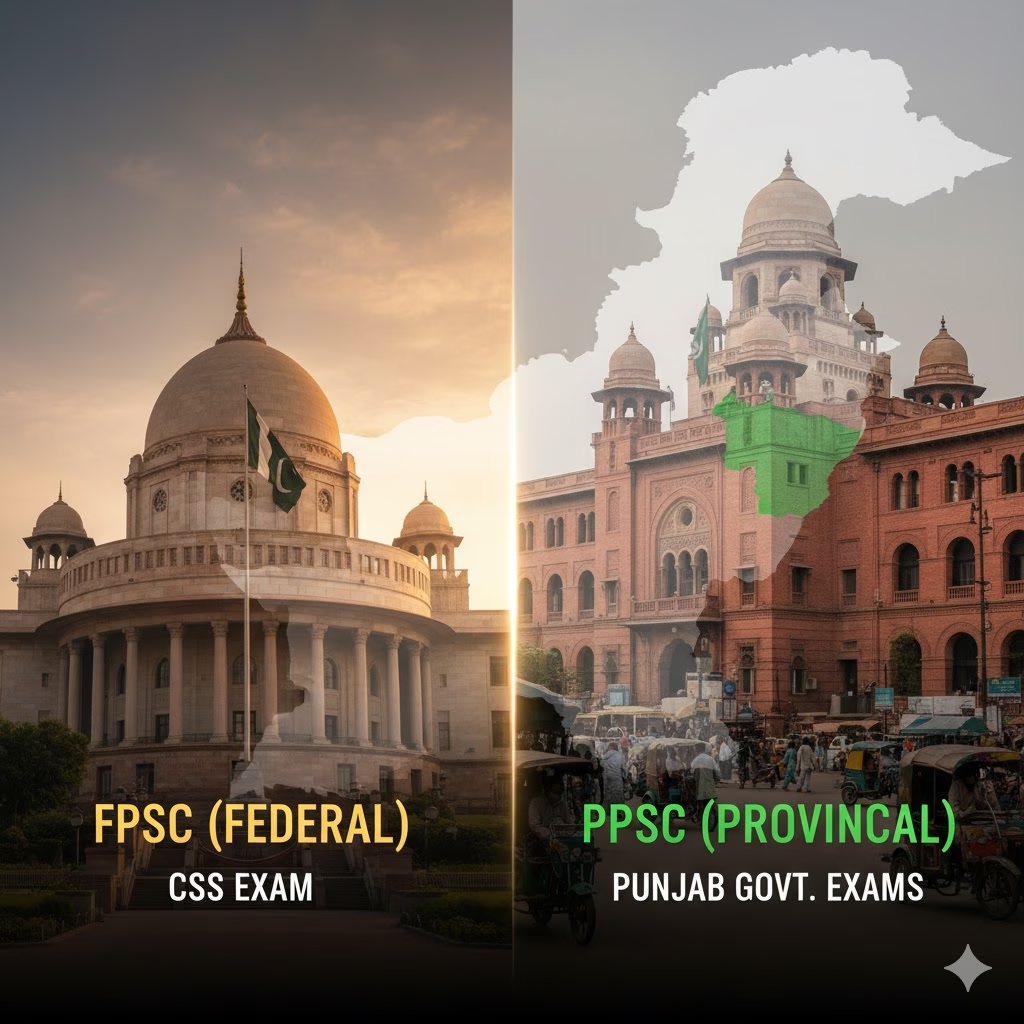
Pakistan has two major public service commissions that manage government job recruitments — the Punjab Public Service Commission (PPSC) and the Federal Public Service Commission (FPSC). Both institutions play a vital role in ensuring merit-based selection and transparency in government hiring, but they operate at different administrative levels and have distinct responsibilities.


🏛️ 1. What is FPSC?

The Federal Public Service Commission (FPSC) is a federal-level constitutional body established under Article 242 of the Constitution of Pakistan (1973). It is responsible for recruiting civil servants for federal government departments, ministries, and autonomous organizations that fall under the Government of Pakistan.

Major Responsibilities:

  • Conducting the Central Superior Services (CSS) Examination for recruitment to the Federal Civil Services (BPS-17).
  • Managing recruitment for federal ministries and divisions, such as Interior, Defence, Foreign Affairs, and Education.
  • Conducting general recruitment tests for various federal jobs (BPS-16 and above).
  • Advising the President on policies related to human resource management in the federal civil service.

Head Office: FPSC Headquarters, Aga Khan Road, Islamabad
Website: www.fpsc.gov.pk


🏛️ 2. What is PPSC?

The Punjab Public Service Commission (PPSC) operates at the provincial level and is governed by the Punjab Public Service Commission Ordinance, 1978. It handles recruitment for provincial government departments in the Province of Punjab, such as Health, Education, Police, Agriculture, and Local Government.

Major Responsibilities:

  • Conducting the Provincial Management Service (PMS) Exam — Punjab’s top-tier provincial civil service exam.
  • Holding competitive tests for provincial jobs (usually BPS-11 and above).
  • Recommending qualified candidates for various Punjab government departments.
  • Advising the Chief Minister and Provincial Government on service rules and promotions.

Head Office: LDA Plaza, 7-Edgerton Road, Lahore
Website: www.ppsc.gop.pk


⚙️ 3. Key Differences Between PPSC and FPSC

FeaturePPSC (Punjab Public Service Commission)FPSC (Federal Public Service Commission)
JurisdictionProvince of PunjabEntire Pakistan (Federal Level)
Constitutional StatusProvincial (under Punjab Ordinance 1978)Constitutional Body (Article 242)
Recruitment TypeProvincial Government JobsFederal Government Jobs
Top ExamPMS (Provincial Management Service)CSS (Central Superior Services)
Head OfficeLahoreIslamabad
Governing AuthorityGovernment of PunjabGovernment of Pakistan
Age Limit (General)Usually 18–35 years (varies by post)Usually 21–30 years (for CSS)
Application Portalwww.ppsc.gop.pkwww.fpsc.gov.pk
Example DepartmentsHealth, Police, Education, Agriculture, LGCDFIA, FBR, Ministry of Defence, Foreign Affairs

📚 4. Similarities Between FPSC and PPSC

Despite operating at different levels, both commissions share common values and processes:

  • Merit-based recruitment through written tests and interviews.
  • Transparency and equal opportunity for all applicants.
  • Strict adherence to service rules and eligibility criteria.
  • Online application systems and publicly available results.

🧩 5. Which One Should You Apply For?

It depends on where you want to serve:

  • If you wish to work in federal ministries or national-level institutions, apply through FPSC.
  • If you prefer serving within Punjab’s provincial administration, apply through PPSC.

Many competitive aspirants appear in both exams (CSS & PMS) to maximize their chances of joining civil services.


💬 6. Final Thoughts

Both PPSC and FPSC uphold the same ideals — merit, transparency, and good governance. FPSC serves the entire country at the federal level, while PPSC ensures administrative efficiency and merit-based governance within Punjab. Together, they represent Pakistan’s commitment to building a professional, capable, and corruption-free public service system.

🏛️ Understanding the Punjab Public Service Commission (PPSC): Role, Functions, and Importance

The Punjab Public Service Commission (PPSC) is one of Pakistan’s oldest and most trusted government institutions, responsible for recruiting competent and qualified individuals for provincial civil services and government departments in Punjab. It serves as a bridge between the provincial government and citizens seeking merit-based employment in the public sector.


📜 Historical Background

The PPSC traces its roots back to 1926, when the Public Service Commission was first established in British India. After Pakistan’s independence in 1947, the commission was reorganized to serve the newly created provinces. The Punjab Public Service Commission was officially constituted under the Punjab Public Service Commission Ordinance, 1978, functioning as an autonomous body under the Punjab Public Service Commission (Functions) Rules, 1978.

Since then, it has been the primary recruitment agency for all provincial departments, ensuring transparency, fairness, and meritocracy in public service appointments.


⚙️ Core Functions of PPSC

The PPSC’s responsibilities go beyond conducting exams — it plays a key role in building an efficient and professional bureaucracy.

Its major functions include:

  1. Recruitment through examinations and interviews for various provincial departments (BPS-11 and above).
  2. Advising the Government of Punjab on matters related to service rules, promotions, transfers, and disciplinary cases.
  3. Ensuring merit-based selection through standardized written tests, psychological assessments, and interviews.
  4. Conducting Departmental Promotion and Selection Board exams for in-service government employees.
  5. Evaluating and improving recruitment standards in line with modern governance needs.

🧭 The Vision and Mission of PPSC

Vision:
To be a model of excellence in public sector recruitment through integrity, professionalism, and transparency.

Mission:
To select and recommend suitable candidates purely on merit, fostering a competent, efficient, and responsive civil service for Punjab.


🧩 Structure and Governance

The PPSC is headed by a Chairman, appointed by the Governor of Punjab, along with several Members who assist in decision-making, policy formulation, and exam supervision. The administrative structure includes divisions for:

  • Examinations
  • Recruitment Operations
  • Psychological Assessment
  • Research and Development
  • Information Technology and Support Services

This system ensures checks and balances at every stage of the recruitment process.


🧾 Major Examinations Conducted by PPSC

The Commission conducts a wide range of tests and examinations, such as:

  • Provincial Management Service (PMS) Exam – the provincial equivalent of the CSS exam.
  • Subject Specialist, Lecturer, and Educator Recruitment Exams.
  • Technical and Professional Posts (Engineers, Doctors, Agriculture Officers, etc.).
  • General Recruitment Tests for administrative and field-level positions.

Each test is designed according to a transparent merit-based system with clearly defined syllabi, marking criteria, and interview procedures.


📊 Facts and Figures

  • Head Office: LDA Plaza, 7-Edgerton Road, Lahore
  • Website: www.ppsc.gop.pk
  • Helpline: 042-111-988-722
  • Mode of Application: 100% Online
  • Tests Conducted Annually: Over 300 recruitment tests for thousands of posts.
  • Candidates Served: More than 500,000 applicants apply each year for PPSC jobs.

💡 Why PPSC Matters

In a province as large and diverse as Punjab, a transparent recruitment system is essential for effective governance. PPSC plays a critical role in maintaining fairness, combating nepotism, and ensuring equal opportunity for all.

By selecting individuals based purely on merit and competence, the Commission contributes to building a professional, accountable, and service-oriented public administration — the backbone of provincial governance.


🌐 Commitment to Modernization

In recent years, PPSC has embraced digital transformation. The entire recruitment process — from application submission to test result announcement — is now conducted online. Candidates can check syllabi, roll numbers, and results directly on the official website. This shift has made the process faster, more transparent, and accessible to applicants across the province.


🏆 Conclusion

The Punjab Public Service Commission is not just an exam-conducting body — it is an institution that upholds merit, transparency, and trust in public recruitment. Through consistent reforms and digital innovation, PPSC continues to strengthen the foundations of good governance and empower capable individuals to serve Punjab with integrity and excellence.